Guillain barre weakness pattern information
Home » » Guillain barre weakness pattern informationYour Guillain barre weakness pattern images are ready in this website. Guillain barre weakness pattern are a topic that is being searched for and liked by netizens now. You can Download the Guillain barre weakness pattern files here. Download all royalty-free photos.
If you’re searching for guillain barre weakness pattern images information related to the guillain barre weakness pattern keyword, you have pay a visit to the ideal site. Our website always gives you suggestions for seeking the highest quality video and image content, please kindly hunt and locate more enlightening video content and images that match your interests.
Guillain Barre Weakness Pattern. The frequency of GBS was 14- to 10-fold higher than that expected in this period for a population of this magnitude. Guillain-Barré syndrome is one of several disorders involving weakness due to peripheral nerve damage caused by the persons immune system. By definition the nadir is usually reached within 4 weeks. While GBS comes on rapidly over days to weeks and the person usually recovers other disorders develop slowly and can linger or recur.
 Pin On Medisch From nl.pinterest.com
A characteristic pattern of weakness involving the extensor components of. The frequency of GBS was 14- to 10-fold higher than that expected in this period for a population of this magnitude. Although the classic description of Guillain-Barré Syndrome is that of a demyelinating neuropathy with ascending weakness predominant bilateral finger drop as presenting feature has rarely been reported. Guillain-Barré syndrome GBS is one of the classic diseases in neurology with an easily recognized clinical pattern of acral paresthesias ascending generalized weakness and areflexia. The clinical severity of Guillain-Barré syndrome varies but at its worst it can lead to respiratory insufficiency and death. Therefore all patients with suspected Guillain-Barre Syndrome should be examined carefully for pattern of muscle weakness in extremities which may be helpful in differential diagnosis.
Lower extremity weakness usually begins first and ascends symmetrically and progressively over the first several days.
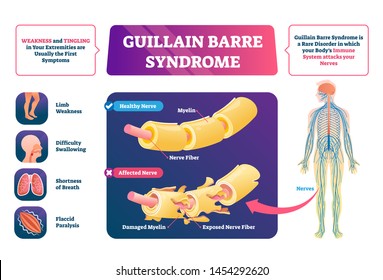
GuillainBarré syndrome GBS is a rapid-onset muscle weakness caused by the immune system damaging the peripheral nervous system. With appropriate treatment and monitoring most people make a full recovery. Guillain-Barré syndrome is one of several disorders involving weakness due to peripheral nerve damage caused by the persons immune system. The development of the condition usually follows a pattern. Although the classic description of Guillain-Barré Syndrome is that of a demyelinating neuropathy with ascending weakness predominant bilateral finger drop as presenting feature has rarely been reported. A characteristic pattern of weakness involving the extensor components of the fingers known as finger drop sign has been first described to be specific in acute motor axonal neuropathy form of Guillain-Barré Syndrome in the literature.
 Source: thelancet.com
Guillain-Barré syndrome is one of several disorders involving weakness due to peripheral nerve damage caused by the persons immune system. The majority of the patients 73 improved with one course of intravenous immunoglobulin IV IG. Guillain-Barre syndrome GBS patients describe a fulminant course of symptoms that usually include ascending weakness and non-length dependent sensory symptoms. The development of the condition usually follows a pattern. The frequency of GBS was 14- to 10-fold higher than that expected in this period for a population of this magnitude.
 Source: scribd.com
The frequency of GBS was 14- to 10-fold higher than that expected in this period for a population of this magnitude. All seven patients developed severe GBS. Therefore all patients with suspected Guillain-Barre Syndrome should be examined carefully for pattern of muscle weakness in extremities which may be helpful in differential diagnosis. Guillain-Barre syndrome GBS patients describe a fulminant course of symptoms that usually include ascending weakness and non-length dependent sensory symptoms. Proximal lower limb LL weakness was the predominant clinical presentation.
 Source: medmastery.com
Proximal lower limb LL weakness was the predominant clinical presentation. Although the classic description of Guillain-Barré Syndrome is that of a demyelinating neuropathy with ascending weakness predominant bilateral finger drop as presenting feature has rarely been reported. Demonstrating adequate ventilation with no signs of respiratory distress and effective breathing pattern. Ineffective Breathing Pattern related to Guillain-Barre Syndrome Nursing Care Plan for Guillain-Barre Syndrome Nursing Diagnosis. All seven patients developed severe GBS.
 Source: pinterest.com
Some patients have a distinct and persistent clinical variant of GBS that does not progress to the classic pattern of sensory loss and weakness. It requires immediate hospital admission as it can rapidly become very serious. Prior to developing the condition most people with Guillain-Barré syndrome have a bacterial or viral infection. Therefore all patients with suspected Guillain-Barre Syndrome should be examined carefully for pattern of muscle weakness in extremities which may be helpful in differential diagnosis. With appropriate treatment and monitoring most people make a full recovery.
 Source: westjem.com
Two-thirds of patients have a history of gastroenteritis or influenza-like illness weeks before onset of neurologic symptoms. A characteristic pattern of weakness involving the extensor components of the fingers known as finger drop sign has been first described to be specific in acute motor axonal neuropathy form of Guillain-Barré Syndrome in the literature. GuillainBarré syndrome GBS is a rapid-onset muscle weakness caused by the immune system damaging the peripheral nervous system. Two-thirds of patients have a history of gastroenteritis or influenza-like illness weeks before onset of neurologic symptoms. Prior to developing the condition most people with Guillain-Barré syndrome have a bacterial or viral infection.
 Source: shutterstock.com
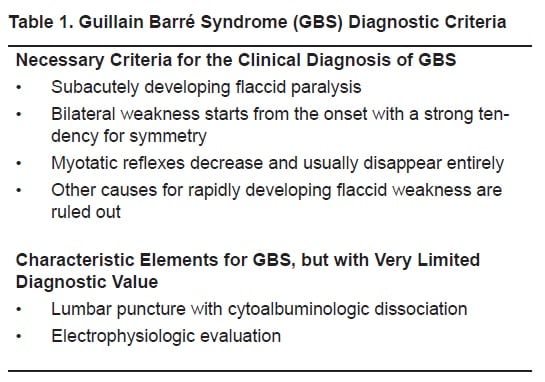
Guillain-Barré syndrome classically presents as an acute-onset rapidly progressive flaccid weakness starting in the legs associated with diminished or absent tendon reflexes. While GBS comes on rapidly over days to weeks and the person usually recovers other disorders develop slowly and can linger or recur. In addition the frequency of bilateral facial weakness which typically occurs in. Guillain-Barré syndrome GBS is an acute neuropathy typically characterized by diffuse limb weakness whereas neurological features between cases are considerably diverse 1 2Previous observations have identified some cases without diffuse limb weakness as having regional variants of GBS and these observations were all unexceptionally made in western countries. Weakness or paralysis of the respiratory muscles.
 Source: nejm.org
The frequency of GBS was 14- to 10-fold higher than that expected in this period for a population of this magnitude. Symmetric involvement is a key feature of GBS6. Lower extremity weakness usually begins first and ascends symmetrically and progressively over the first several days. Some patients have a distinct and persistent clinical variant of GBS that does not progress to the classic pattern of sensory loss and weakness. All seven patients developed severe GBS.
 Source: thelancet.com
The frequency of GBS was 14- to 10-fold higher than that expected in this period for a population of this magnitude. People with this condition can have other signs and symptoms common in Guillain-Barré syndrome such as muscle weakness. Some patients have a distinct and persistent clinical variant of GBS that does not progress to the classic pattern of sensory loss and weakness. All seven patients developed severe GBS. Guillain-Barre syndrome GBS patients describe a fulminant course of symptoms that usually include ascending weakness and non-length dependent sensory symptoms.
 Source: thelancet.com
Guillain-Barre syndrome is an acute inflammatory polyneuropathy that is classified according to symptoms and divided into axonal and demyelinating forms. Typically both sides of the body are involved and the initial symptoms are changes in sensation or pain often in the back along with muscle weakness beginning in the feet and hands often spreading to the arms and upper body. Upper extremity weakness was mainly distal while lower extremity weakness was mainly proximal and there is predilection for trunk muscle involvement that is quite unusual in other types of polyneuropathy. The clinical severity of Guillain-Barré syndrome varies but at its worst it can lead to respiratory insufficiency and death. A characteristic pattern of weakness involving the extensor components of.
 Source: jns-journal.com
Lower extremity weakness usually begins first and ascends symmetrically and progressively over the first several days. A characteristic pattern of weakness involving the extensor components of the fingers known as finger drop sign has been first described to be specific in acute motor axonal neuropathy form of Guillain-Barré Syndrome in the literature. With appropriate treatment and monitoring most people make a full recovery. Prior to developing the condition most people with Guillain-Barré syndrome have a bacterial or viral infection. The development of the condition usually follows a pattern.
 Source: researchgate.net
A characteristic pattern of weakness involving the extensor components of. Two-thirds of patients have a history of gastroenteritis or influenza-like illness weeks before onset of neurologic symptoms. Demonstrating adequate ventilation with no signs of respiratory distress and effective breathing pattern. Upper extremity weakness was mainly distal while lower extremity weakness was mainly proximal and there is predilection for trunk muscle involvement that is quite unusual in other types of polyneuropathy. It requires immediate hospital admission as it can rapidly become very serious.
 Source: sciencedirect.com
The majority of the patients 73 improved with one course of intravenous immunoglobulin IV IG. The development of the condition usually follows a pattern. Guillain-Barré syndrome GBS is an acute neuropathy typically characterized by diffuse limb weakness whereas neurological features between cases are considerably diverse 1 2Previous observations have identified some cases without diffuse limb weakness as having regional variants of GBS and these observations were all unexceptionally made in western countries. All seven patients developed severe GBS. Weakness or paralysis of the respiratory muscles.
 Source: researchgate.net
Therefore all patients with suspected Guillain-Barre Syndrome should be examined carefully for pattern of muscle weakness in extremities which may be helpful in differential diagnosis. Therefore all patients with suspected Guillain-Barre Syndrome should be examined carefully for pattern of muscle weakness in extremities which may be helpful in differential diagnosis. Lower extremity weakness usually begins first and ascends symmetrically and progressively over the first several days. Proximal lower limb LL weakness was the predominant clinical presentation. Ineffective breathing pattern related to.
 Source: thelancet.com
Two-thirds of patients have a history of gastroenteritis or influenza-like illness weeks before onset of neurologic symptoms. By definition the nadir is usually reached within 4 weeks. The main symptom is weakness of the muscles that are supplied by the affected nerves. Ineffective Breathing Pattern related to Guillain-Barre Syndrome Nursing Care Plan for Guillain-Barre Syndrome Nursing Diagnosis. While GBS comes on rapidly over days to weeks and the person usually recovers other disorders develop slowly and can linger or recur.
 Source: thelancet.com
The frequency of GBS was 14- to 10-fold higher than that expected in this period for a population of this magnitude. It requires immediate hospital admission as it can rapidly become very serious. With appropriate treatment and monitoring most people make a full recovery. GuillainBarré syndrome GBS is a rapid-onset muscle weakness caused by the immune system damaging the peripheral nervous system. Guillain-Barré syndrome GBS is one of the classic diseases in neurology with an easily recognized clinical pattern of acral paresthesias ascending generalized weakness and areflexia.
Source: nl.pinterest.com
Typically both sides of the body are involved and the initial symptoms are changes in sensation or pain often in the back along with muscle weakness beginning in the feet and hands often spreading to the arms and upper body. Prior to developing the condition most people with Guillain-Barré syndrome have a bacterial or viral infection. Ineffective breathing pattern related to. Guillain-Barré syndrome is one of several disorders involving weakness due to peripheral nerve damage caused by the persons immune system. Some patients have a distinct and persistent clinical variant of GBS that does not progress to the classic pattern of sensory loss and weakness.
 Source: jns-journal.com
Weakness or paralysis of the respiratory muscles. Nerve conduction studies NCS demonstrated a demyelinating pattern in 70 an axonal pattern in 15 mixed type in 5 and no abnormality in the remaining 5. Guillain-Barré syndrome classically presents as an acute-onset rapidly progressive flaccid weakness starting in the legs associated with diminished or absent tendon reflexes. A characteristic pattern of weakness involving the extensor components of. Guillain-Barré syndrome affects the nerves of the limbs and body and is usually triggered by an infection.
 Source: sciencedirect.com
Guillain-Barre syndrome is an acute inflammatory polyneuropathy that is classified according to symptoms and divided into axonal and demyelinating forms. Upper extremity weakness was mainly distal while lower extremity weakness was mainly proximal and there is predilection for trunk muscle involvement that is quite unusual in other types of polyneuropathy. Proximal lower limb LL weakness was the predominant clinical presentation. The development of the condition usually follows a pattern. By definition the nadir is usually reached within 4 weeks.
This site is an open community for users to do sharing their favorite wallpapers on the internet, all images or pictures in this website are for personal wallpaper use only, it is stricly prohibited to use this wallpaper for commercial purposes, if you are the author and find this image is shared without your permission, please kindly raise a DMCA report to Us.
If you find this site helpful, please support us by sharing this posts to your preference social media accounts like Facebook, Instagram and so on or you can also save this blog page with the title guillain barre weakness pattern by using Ctrl + D for devices a laptop with a Windows operating system or Command + D for laptops with an Apple operating system. If you use a smartphone, you can also use the drawer menu of the browser you are using. Whether it’s a Windows, Mac, iOS or Android operating system, you will still be able to bookmark this website.
Category
Related By Category
- Child tax credit payments bill information
- Child tax credit july 2021 portal information
- Finance of america stock information
- Team usa in olympics information
- Mel gibson christ movie information
- Child tax credit portal down information
- Stephen a smith i dont care gif information
- Usa basketball in olympics information
- Social security yuba city information
- Stephen a smith megan olivi information