Guillain barre emg findings information
Home » » Guillain barre emg findings informationYour Guillain barre emg findings images are available. Guillain barre emg findings are a topic that is being searched for and liked by netizens now. You can Get the Guillain barre emg findings files here. Download all free vectors.
If you’re looking for guillain barre emg findings pictures information connected with to the guillain barre emg findings keyword, you have come to the right blog. Our site always gives you hints for downloading the maximum quality video and image content, please kindly search and find more enlightening video articles and graphics that fit your interests.
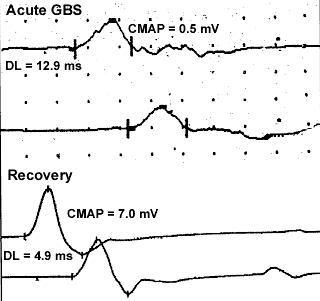
Guillain Barre Emg Findings. Electromyography EMG and nerve conduction studies NCS can be very helpful in the diagnosis. They are often ordered however to exclude other diagnoses and to better assess functional status and prognosis. 1Division of Neurology National Center for Child Health and Development Tokyo. When severe distal conduction block is the cause for failure to elicit CMAP a better functional recovery can be expected Tri- ggs et al 1992.
 Program Information Ppt Download From slideplayer.com
When severe distal conduction block is the cause for failure to elicit CMAP a better functional recovery can be expected Tri- ggs et al 1992. We included seven GBS patients and assessed their neurologic function at admission and 2 3 and 6 months post onset using Hughes Functional Grading Scale scores. Two-thirds of patients have a history of gastroenteritis or influenza-like illness weeks before onset of neurological symptoms. The electrodiagnostic findings in Guillain-Barré syndrome GBS play important roles in both understanding its pathophysiology and its diagnosis. The axonal form of Guillain-Barre syndrome as defined by EMG findings has been associated with a poor clinical outcome Feasby et al 1986. The H reflex is the most sensitive test for early GBS.
1Division of Neurology National Center for Child Health and Development Tokyo.
Guillain-Barré syndrome is the historical name for a heterogeneous series of acute immune mediated demyelinating polyneuropathies which most frequently present as an acute illness following some infectious episode. Early and serial electrodiagnostic findings in childhood Guillain-Barré syndrome. Absent H response abnormal F wave and abnormal upper extremity SNAP combined with a normal sural SNAP are characteristic of early GBS. We report electrodiagnostic findings for 18 patients with suspected GBS within 4 days of clinical onset. Basic laboratory studies such as complete blood counts CBCs and metabolic panels are normal and of limited value in the workup. Electromyography EMG and nerve conduction studies NCS can be very helpful in the diagnosis.
 Source: medmastery.com
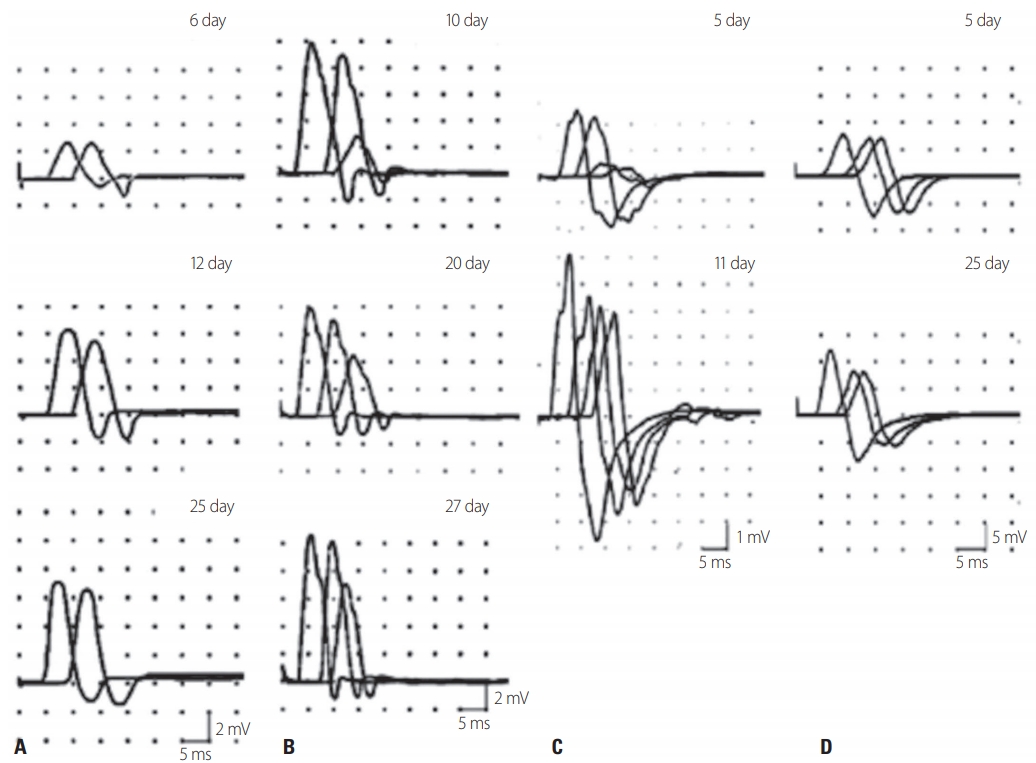
The H reflex is the most sensitive test for early GBS. Electromyography EMG and nerve conduction studies NCS can be very helpful in the diagnosis. Cerebrospinal fluid analysis through a lumbar spinal puncture and nerve conduction studies are supportive investigations commonly performed in the diagnosis of GBS. We sought to investigate electromyographic characteristics of Guillain-Barré syndrome GBS patients in the recovery phase by using serial electromyography EMG. Two-thirds of patients have a history of gastroenteritis or influenza-like illness weeks before onset of neurological symptoms.
 Source: netterimages.com
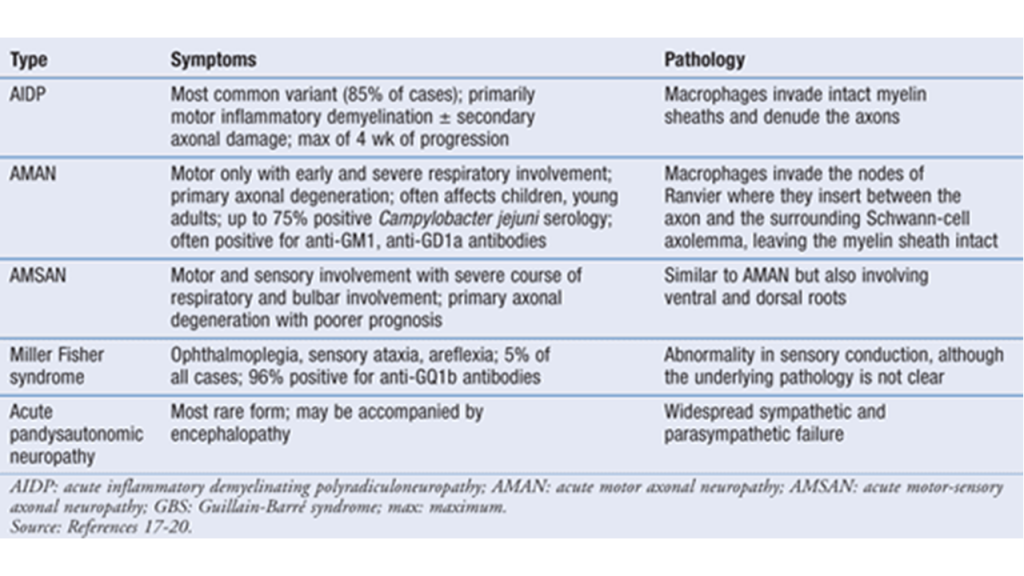
Guillain-Barre syndrome is an acute inflammatory polyneuropathy that is classified according to symptoms and divided into axonal and demyelinating forms. Absent H response abnormal F wave and abnormal upper extremity SNAP combined with a normal sural SNAP are characteristic of early GBS. They are often ordered however to exclude other diagnoses and to better assess functional status and prognosis. However at early stages patients may not meet current neurophysiologic criteria. Article in Japanese Mizuguchi K1 Hoshino H Abe Y Nagasawa T Oka A Kubota M.
 Source: drawittoknowit.com
Other findings included an abnormal F wave 25 patients 84 reduced compound muscle action potential amplitude 22 patients 71 prolonged distal latency 20 patients 65 temporal dispersion 18 patients 58 slowed motor conduction velocity 16 patients 52 and motor conduction block 4 patients 13. Common Guillain-Barre syndrome findings from a full cognitive cranial nerve motor sensory reflex gait and coordination exam include proximal symmetrical and facial weakness ophthalmoplegia areflexia hyporeflexia tachycardia and postural hypotension. Absent H response abnormal F wave and abnormal upper extremity SNAP combined with a normal sural SNAP are characteristic of early GBS. 1Division of Neurology National Center for Child Health and Development Tokyo. RECENT FINDINGS GBS is an acute inflammatory neuropathic illness with striking clinical manifestations and significant morbidity.
 Source: neuromuscular.wustl.edu
When severe distal conduction block is the cause for failure to elicit CMAP a better functional recovery can be expected Tri- ggs et al 1992. Only demyelinating neuropathies were thought to be present when GBS patients were first diagnosed in Western countries but the concept changed when many axonal GBS patients were reported in Asia. Common Guillain-Barre syndrome findings from a full cognitive cranial nerve motor sensory reflex gait and coordination exam include proximal symmetrical and facial weakness ophthalmoplegia areflexia hyporeflexia tachycardia and postural hypotension. The H reflex is the most sensitive test for early GBS. Cerebrospinal fluid analysis through a lumbar spinal puncture and nerve conduction studies are supportive investigations commonly performed in the diagnosis of GBS.
 Source: scielo.br
Guillain-Barre syndrome is an acute inflammatory polyneuropathy that is classified according to symptoms and divided into axonal and demyelinating forms. Upper extremity SNAPs are also frequently abnormal in early GBS. Electromyography EMG and nerve conduction studies NCS can be very helpful in the diagnosis. Guillain-Barre syndrome is an acute inflammatory polyneuropathy that is classified according to symptoms and divided into axonal and demyelinating forms. Guillain-Barré syndrome is the historical name for a heterogeneous series of acute immune mediated demyelinating polyneuropathies which most frequently present as an acute illness following some infectious episode.
 Source: e-acn.org
They are often ordered however to exclude other diagnoses and to better assess functional status and prognosis. They are often ordered however to exclude other diagnoses and to better assess functional status and prognosis. However at early stages patients may not meet current neurophysiologic criteria. We report electrodiagnostic findings for 18 patients with suspected GBS within 4 days of clinical onset. Early electrodiagnostic findings in Guillain-Barré syndrome.
 Source: researchgate.net
Guillain-Barré syndrome is the historical name for a heterogeneous series of acute immune mediated demyelinating polyneuropathies which most frequently present as an acute illness following some infectious episode. The electrodiagnostic findings in Guillain-Barré syndrome GBS play important roles in both understanding its pathophysiology and its diagnosis. The axonal form of Guillain-Barre syndrome as defined by EMG findings has been associated with a poor clinical outcome Feasby et al 1986. Guillain-Barre syndrome is an acute inflammatory polyneuropathy that is classified according to symptoms and divided into axonal and demyelinating forms. Absent H response abnormal F wave and abnormal upper extremity SNAP combined with a normal sural SNAP are characteristic of early GBS.
 Source: researchgate.net
Upper extremity SNAPs are also frequently abnormal in early GBS. Common Guillain-Barre syndrome findings from a full cognitive cranial nerve motor sensory reflex gait and coordination exam include proximal symmetrical and facial weakness ophthalmoplegia areflexia hyporeflexia tachycardia and postural hypotension. PURPOSE OF REVIEW This article reviews the clinical features diagnosis and differential diagnosis prognosis pathogenesis and current and upcoming treatments of Guillain-Barré syndrome GBS. Abnormalities in NCS that are consistent with. We included seven GBS patients and assessed their neurologic function at admission and 2 3 and 6 months post onset using Hughes Functional Grading Scale scores.
 Source: dovepress.com
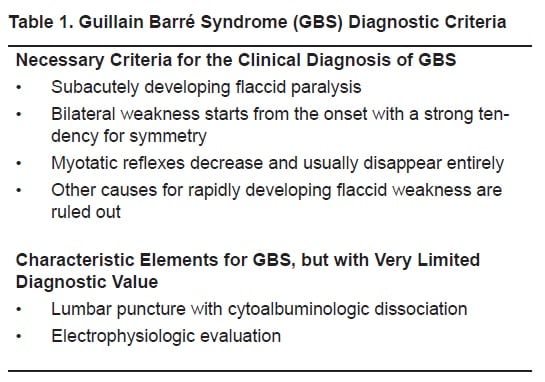
Absent H response abnormal F wave and abnormal upper extremity SNAP combined with a normal sural SNAP are characteristic of early GBS. Early and serial electrodiagnostic findings in childhood Guillain-Barré syndrome. Basic laboratory studies such as complete blood counts CBCs and metabolic panels are normal and of limited value in the workup. The diagnosis of GuillainBarré syndrome depends on findings such as rapid development of muscle paralysis absent reflexes absence of fever and absence of a likely cause. The H reflex is the most sensitive test for early GBS.
Source: slideplayer.com
The axonal form of Guillain-Barre syndrome as defined by EMG findings has been associated with a poor clinical outcome Feasby et al 1986. RECENT FINDINGS GBS is an acute inflammatory neuropathic illness with striking clinical manifestations and significant morbidity. Two-thirds of patients have a history of gastroenteritis or influenza-like illness weeks before onset of neurological symptoms. When severe distal conduction block is the cause for failure to elicit CMAP a better functional recovery can be expected Tri- ggs et al 1992. Associated with Zika virus outbreaks.
 Source: oatext.com
Electrodiagnostic studies play a key role in the evaluation of patients with Guillain-Barré syndrome GBS. Early and serial electrodiagnostic findings in childhood Guillain-Barré syndrome. The axonal form of Guillain-Barre syndrome as defined by EMG findings has been associated with a poor clinical outcome Feasby et al 1986. Early electrodiagnostic findings in Guillain-Barré syndrome. Guillain-Barré syndrome GBS is generally diagnosed on clinical grounds.
 Source: slideshare.net
Associated with Zika virus outbreaks. Absent H response abnormal F wave and abnormal upper extremity SNAP combined with a normal sural SNAP are characteristic of early GBS. Article in Japanese Mizuguchi K1 Hoshino H Abe Y Nagasawa T Oka A Kubota M. Only demyelinating neuropathies were thought to be present when GBS patients were first diagnosed in Western countries but the concept changed when many axonal GBS patients were reported in Asia. 1Division of Neurology National Center for Child Health and Development Tokyo.
 Source: emdocs.net
We included seven GBS patients and assessed their neurologic function at admission and 2 3 and 6 months post onset using Hughes Functional Grading Scale scores. When severe distal conduction block is the cause for failure to elicit CMAP a better functional recovery can be expected Tri- ggs et al 1992. Other findings included an abnormal F wave 25 patients 84 reduced compound muscle action potential amplitude 22 patients 71 prolonged distal latency 20 patients 65 temporal dispersion 18 patients 58 slowed motor conduction velocity 16 patients 52 and motor conduction block 4 patients 13. Common Guillain-Barre syndrome findings from a full cognitive cranial nerve motor sensory reflex gait and coordination exam include proximal symmetrical and facial weakness ophthalmoplegia areflexia hyporeflexia tachycardia and postural hypotension. Electrodiagnostic studies play a key role in the evaluation of patients with Guillain-Barré syndrome GBS.
 Source: slideplayer.com
Other findings included an abnormal F wave 25 patients 84 reduced compound muscle action potential amplitude 22 patients 71 prolonged distal latency 20 patients 65 temporal dispersion 18 patients 58 slowed motor conduction velocity 16 patients 52 and motor conduction block 4 patients 13. However at early stages patients may not meet current neurophysiologic criteria. We sought to investigate electromyographic characteristics of Guillain-Barré syndrome GBS patients in the recovery phase by using serial electromyography EMG. Article in Japanese Mizuguchi K1 Hoshino H Abe Y Nagasawa T Oka A Kubota M. RECENT FINDINGS GBS is an acute inflammatory neuropathic illness with striking clinical manifestations and significant morbidity.
 Source: slideplayer.com
Common Guillain-Barre syndrome findings from a full cognitive cranial nerve motor sensory reflex gait and coordination exam include proximal symmetrical and facial weakness ophthalmoplegia areflexia hyporeflexia tachycardia and postural hypotension. 1Division of Neurology National Center for Child Health and Development Tokyo. Electrodiagnostic studies play a key role in the evaluation of patients with Guillain-Barré syndrome GBS. The diagnosis of GuillainBarré syndrome depends on findings such as rapid development of muscle paralysis absent reflexes absence of fever and absence of a likely cause. The axonal form of Guillain-Barre syndrome as defined by EMG findings has been associated with a poor clinical outcome Feasby et al 1986.
 Source:
1Division of Neurology National Center for Child Health and Development Tokyo. We report electrodiagnostic findings for 18 patients with suspected GBS within 4 days of clinical onset. Guillain-Barré syndrome GBS is generally diagnosed on clinical grounds. Associated with Zika virus outbreaks. When severe distal conduction block is the cause for failure to elicit CMAP a better functional recovery can be expected Tri- ggs et al 1992.
 Source: westjem.com
Cognitive function is typically spared in patients with GBS. Electromyography EMG and nerve conduction studies NCS can be very helpful in the diagnosis. However at early stages patients may not meet current neurophysiologic criteria. PURPOSE OF REVIEW This article reviews the clinical features diagnosis and differential diagnosis prognosis pathogenesis and current and upcoming treatments of Guillain-Barré syndrome GBS. They are often ordered however to exclude other diagnoses and to better assess functional status and prognosis.
 Source: emdocs.net
Guillain-Barre syndrome is an acute inflammatory polyneuropathy that is classified according to symptoms and divided into axonal and demyelinating forms. Other findings included an abnormal F wave 25 patients 84 reduced compound muscle action potential amplitude 22 patients 71 prolonged distal latency 20 patients 65 temporal dispersion 18 patients 58 slowed motor conduction velocity 16 patients 52 and motor conduction block 4 patients 13. The electrodiagnostic findings in Guillain-Barré syndrome GBS play important roles in both understanding its pathophysiology and its diagnosis. Guillain-Barré syndrome GBS is generally diagnosed on clinical grounds. They are often ordered however to exclude other diagnoses and to better assess functional status and prognosis.
This site is an open community for users to do submittion their favorite wallpapers on the internet, all images or pictures in this website are for personal wallpaper use only, it is stricly prohibited to use this wallpaper for commercial purposes, if you are the author and find this image is shared without your permission, please kindly raise a DMCA report to Us.
If you find this site helpful, please support us by sharing this posts to your favorite social media accounts like Facebook, Instagram and so on or you can also save this blog page with the title guillain barre emg findings by using Ctrl + D for devices a laptop with a Windows operating system or Command + D for laptops with an Apple operating system. If you use a smartphone, you can also use the drawer menu of the browser you are using. Whether it’s a Windows, Mac, iOS or Android operating system, you will still be able to bookmark this website.
Category
Related By Category
- Child tax credit payments bill information
- Child tax credit july 2021 portal information
- Finance of america stock information
- Team usa in olympics information
- Mel gibson christ movie information
- Child tax credit portal down information
- Stephen a smith i dont care gif information
- Usa basketball in olympics information
- Social security yuba city information
- Stephen a smith megan olivi information